 how-to
7 Facts on Whether Teens Can Safely Jet Ski
Quick Summary
Jet skiing safe teenagers can manage depends on having the right age, training and supervision. The rules differ by state and rental company, so check both before booking, and keep an adult on the water or nearby.
- Check your state's boating rules, since age and certificate requirements differ from state to state.
- Rental companies often set a higher minimum age, and that stricter rule applies to you.
- Keep all operators at least 100 feet from anchored boats, swimmers or rafts, and 150 feet from moving boats.
- Every rider must wear a U.S. Coast Guard approved Type III life jacket that stays below the chin when arms are raised.
- Limit passengers to the number the craft is rated for, and stay off the water in rough conditions.
Table of Contents
- State Age Rules and Boater Safety Certificates
- The Real Risks Teens Face on a Personal Watercraft
- Teen Jet Ski Safety Tips That Actually Reduce Accidents
- Jet Ski Safety Gear Every Teen Needs
- Jet Skiing for Beginners: What to Expect on Your First Ride
- Booking a Safe Teen-Friendly Ride in Miami
- Frequently Asked Questions
How Old Does a Teen Need to Be to Ride a Jet Ski?
Jet skiing safe teenagers can manage depends on having the right age, training and supervision. Without those, the risks climb fast.
State Age Rules and Boater Safety Certificates
The rules differ from state to state, so check the specific requirements where you plan to ride.
You can review state boating rules through the U.S. Coast Guard boating safety resources and your state's boating agency.
Why Rental Companies Often Set a Higher Minimum
If the age limit at a rental shop is higher than your teen's age, that is the rule that applies to you.
The Real Risks Teens Face on a Personal Watercraft
Operators must keep a no-wake speed within 100 feet of anchored boats, swimmers or rafts. They should also keep a distance of 150 feet from moving boats or other personal watercraft.
Teen Jet Ski Safety Tips That Actually Reduce Accidents
Good habits matter more than the machine itself. These steps lower the risk most.
Supervision, Passenger Rules and No-Wake Zones
- Keep an adult on the water or close enough to respond quickly.
- Limit passengers to the number the craft is rated for.
- Obey no-wake zones, especially near docks and beaches.
- Stay off the water when conditions turn rough or visibility drops.
Readiness Check: Is Your Teen Psychologically Prepared?
Physical strength is not the whole story. Ask a few honest questions before handing over the throttle:
- Does your teen stay calm when something goes wrong?
- Do they follow rules when friends are watching?
- Can they judge distance and speed around other boats?
- Do they accept correction without arguing?
Jet Ski Safety Gear Every Teen Needs
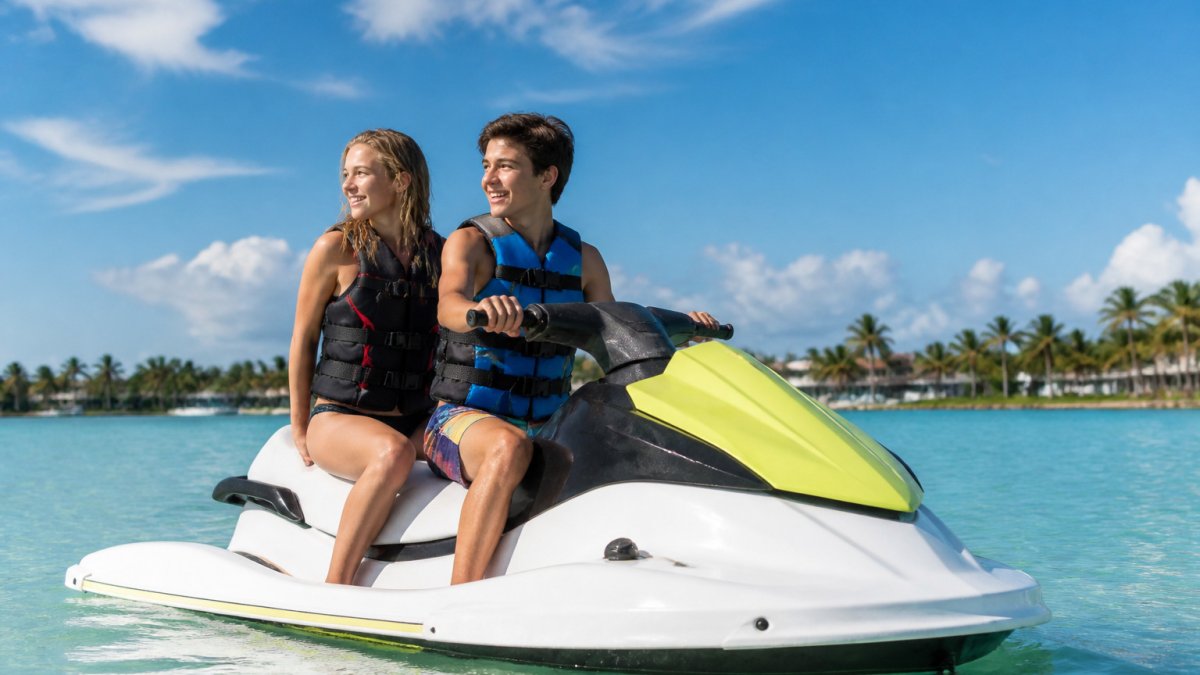
Life jacket (PFD). Every rider must wear a U.S. Coast Guard approved Type III personal flotation device. Type III is designed for calm inland water and general boating, which covers most jet ski use. Fit is critical: a PFD that rides up over the ears or hangs loose will not keep a rider's head above water if they are unconscious. Check the fit by having the teen raise both arms overhead while you pull up on the shoulders of the jacket, it should not slide above the chin. A snug fit on a smaller frame often means buying a youth-size PFD rather than an adult small. The U.S. Coast Guard requires that PFDs be in serviceable condition and the right size for the intended wearer Coast Guard guidance on required boating safety equipment.
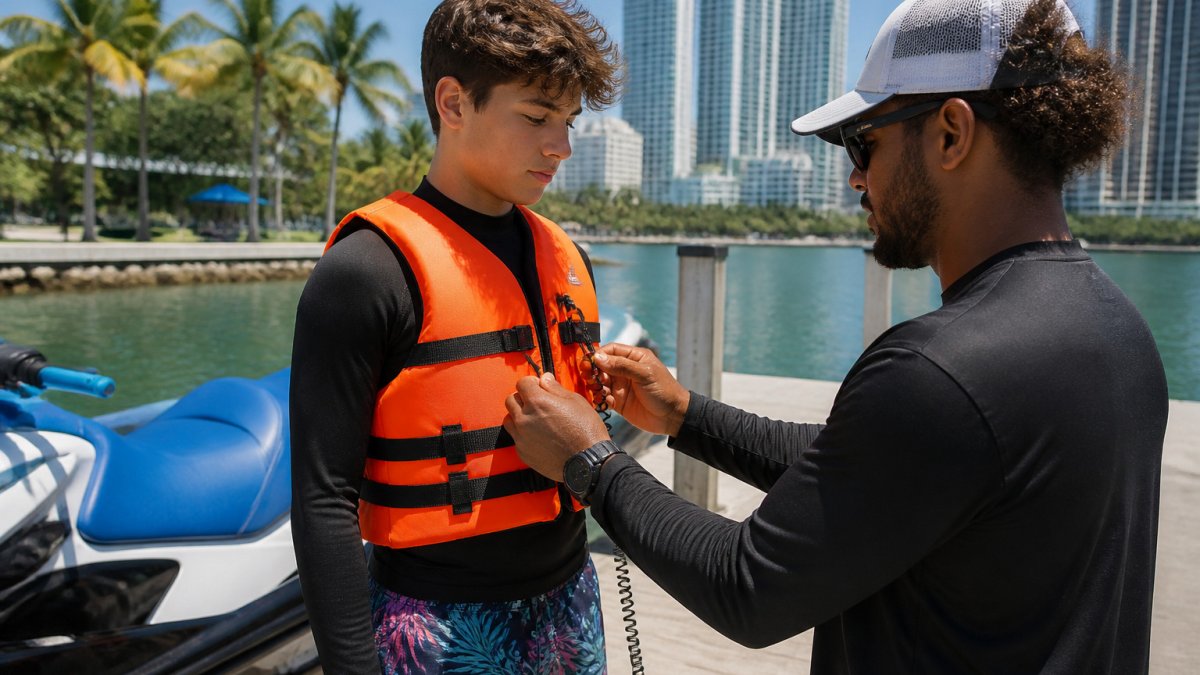
The safety gear a teen rider needs is summarised below, using the requirements the article describes.
| Gear | Requirement | Key check |
|---|---|---|
| Life jacket (PFD) | U.S. Coast Guard approved Type III | Must not ride above the chin when arms are raised |
| Life jacket size | Youth size for a smaller frame | Snug fit, not a loose adult small |
| Kill switch lanyard | Clipped to kill switch and rider | Checked before every ride |
| Whistle | Attached to the PFD | Confirmed during gear check |
Jet Skiing for Beginners: What to Expect on Your First Ride
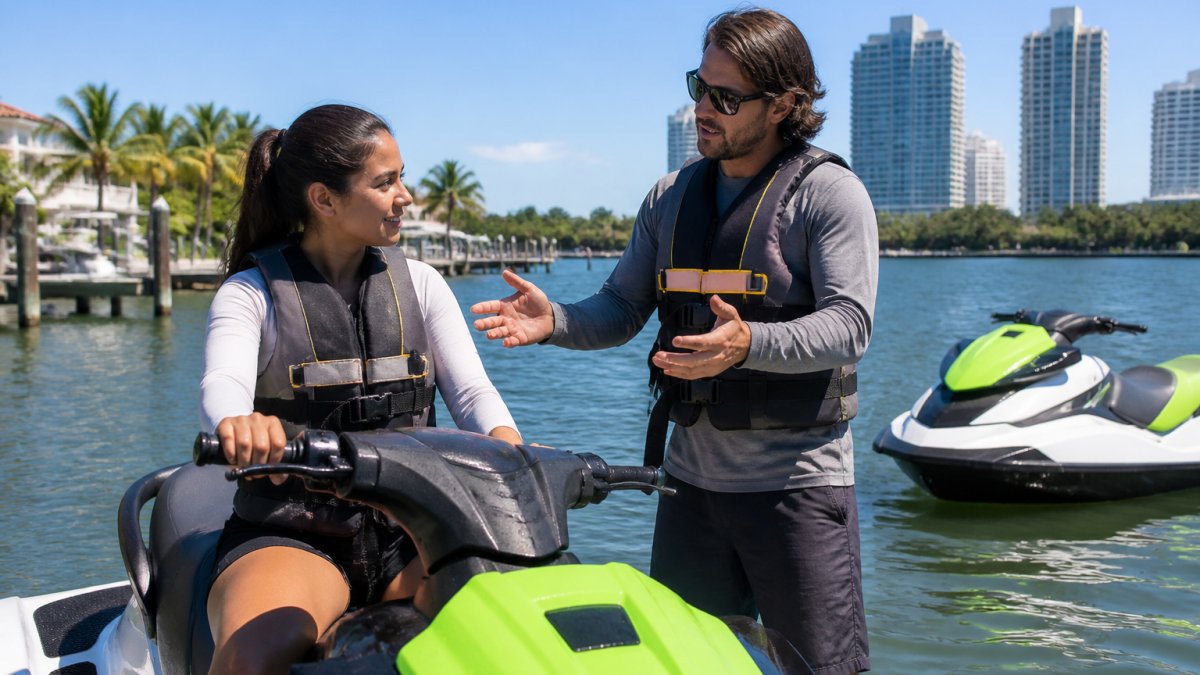
Ask the rental staff for a short orientation before you leave the dock. A good operator will walk you through the kill switch, the lanyard and the throttle.
Booking a Safe Teen-Friendly Ride in Miami
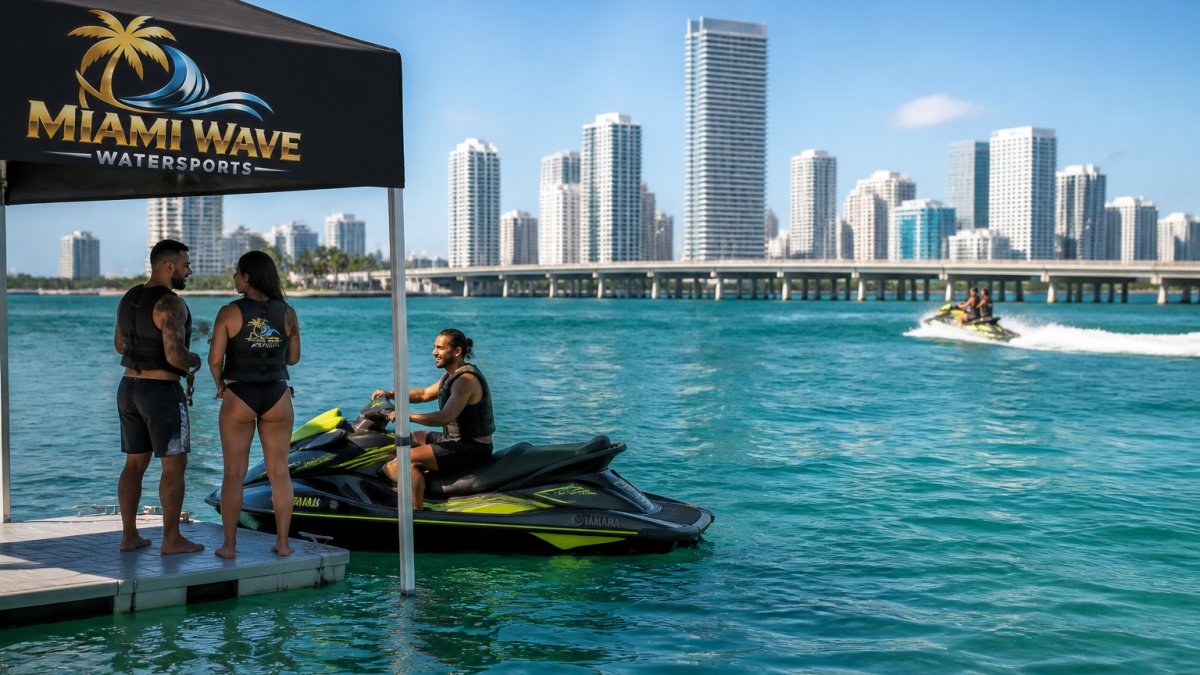
If you are planning a ride with teens, start by confirming the age rules for both the state and the rental company. Miami Wave WaterSports offers hourly jet ski rentals and full-day options, so you can pick the length that fits your group. You can browse the jet ski rental options before you choose a time.
If you have questions about teen policies or availability, contact us directly so you know what applies to your group.
Frequently Asked Questions
What age can a kid go on a jet ski?
Most experts recommend operators be at least 16 years old. Many states require operators to be between 14 and 16 and to hold a Boater Safety Certificate, and some rental operators set a minimum of 17. Check the rules for the state where you ride and the policy of your rental company before booking, since requirements vary.
Can a teenager drive a jet ski by themselves?
In many states a teen can operate a personal watercraft alone once they meet the local minimum age and certification rules. Even when legal, a teen new to the sport benefits from an adult on shore or on the water at first, plus a guided first ride. Ask your rental provider what supervision it requires for minors.
What safety gear should teenagers wear on a jet ski?
Teens should wear a U.S. Coast Guard approved Type III life jacket that fits snugly, along with an engine cutoff lanyard attached to the wrist or life jacket. A helmet and water shoes are also strongly recommended. Choose gear sized for the rider's current weight, not what they might grow into.
Are jet skis safe for beginners?
Jet skis are manageable for beginners who receive instruction on throttle control, braking, and off-throttle steering, but they are less stable and harder to stop than many boats. A short guided session before riding solo significantly lowers the risk of collisions and falls for first-timers.