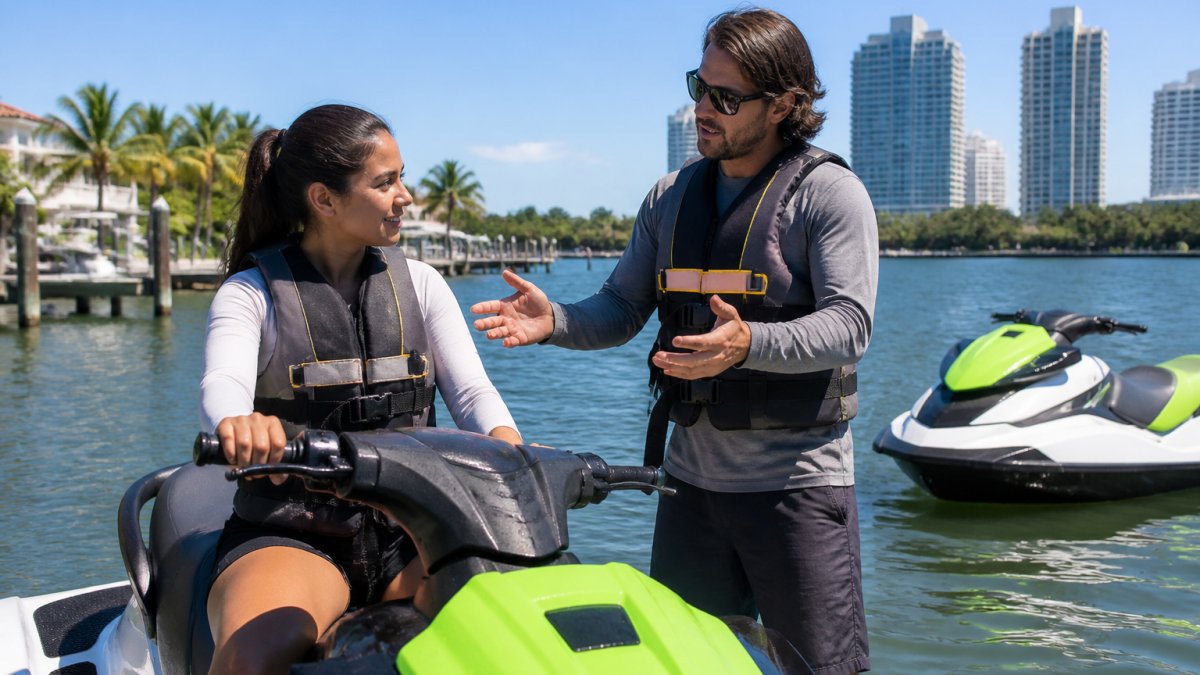
 how-to
Beginner Jet Ski Training in Miami: What to Expect
Last Updated: October 24, 2026
Quick Summary
Beginner jet ski training in Miami starts with a pre-ride briefing on controls and safety gear, then moves to supervised on-water practice in calm, protected water. At Miami Wave WaterSports, our guided jet ski rides pair first-time riders with an instructor. Expect to spend the first stretch at low speed learning throttle control and gentle turns.
- A proper session includes a dock controls demonstration before you start the engine.
- A jet ski needs throttle to turn, so letting off completely removes steering authority.
- Florida requires riders born on or after January 1, 1988 to carry a boater safety card.
- Ask for the all-in total covering base rate, instruction, fuel, deposit, taxes and add-ons.
- If you fall off, stay with the craft and wait for your instructor.
Table of Contents
- What Beginner Jet Ski Training Covers
- How to Drive a Jet Ski for a Beginner
- Jet Ski Safety Tips for Beginners
- Do You Need a Boating License for a Jet Ski?
- Jet Ski Rental Cost: What to Expect
- What to Do in Common Beginner Situations
- Conclusion
- Frequently Asked Questions
What Beginner Jet Ski Training Covers
Beginner jet ski training in Miami starts before you touch the water. A good session covers a pre-ride briefing on controls and safety gear, then moves to supervised on-water practice in calm, protected water. At Miami Wave WaterSports, our guided jet ski rides pair first-time riders with an instructor.
Instruction is the part most rental outfits skim over. You get handed a key and pointed at the water. That approach works fine until something surprises you.
A proper beginner session includes:
- A walk-around of the personal watercraft: fuel, lanyard, mirrors, and inspection points
- Fitting and checking your life jacket, plus a rundown of required safety equipment
- A controls demonstration on the dock before you start the engine
- Slow-speed practice in calm water with an instructor nearby
- A short guided ride through protected water once you're comfortable
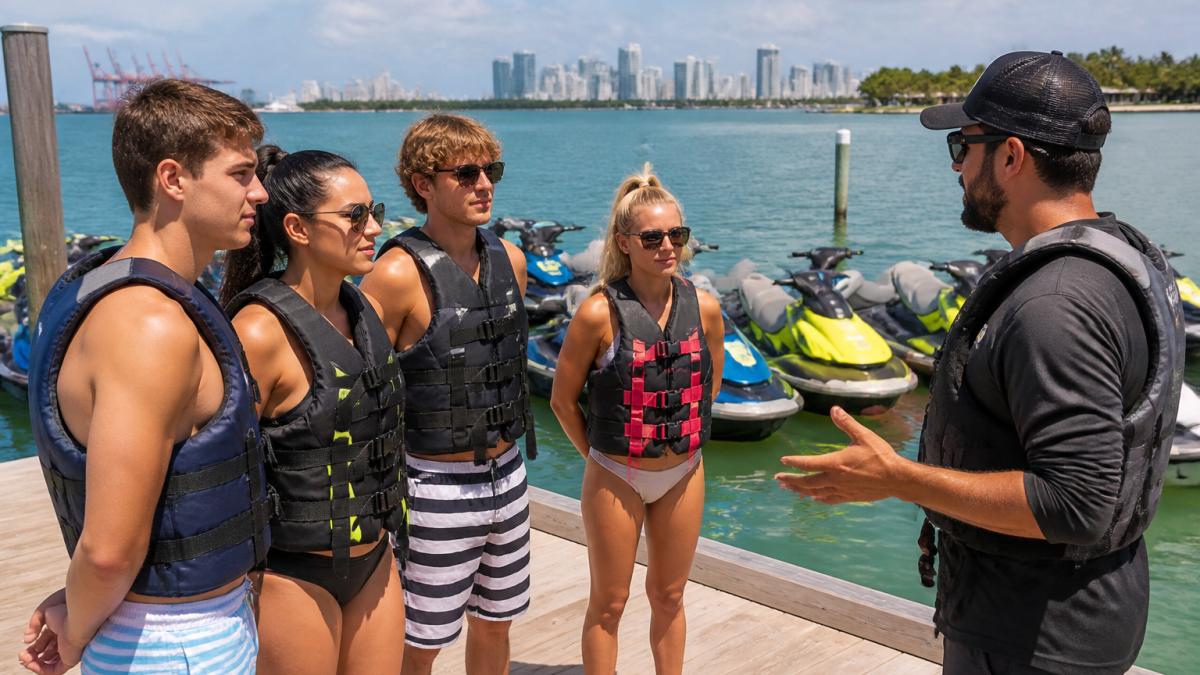
If you want to see the machines you'll be riding before you commit, browse the jet skis available to rent.
Pre-Ride Briefing and Safety Equipment
The briefing is where nerves settle. An instructor explains how the throttle works, how steering differs from a car, and what the engine cutoff lanyard does. You'll fit a personal flotation device and learn where the fire extinguisher and sound-signaling device are stowed.
On-Water Practice in Calm Water
Protected water is the classroom. Instructors keep beginners inside sheltered areas away from boat traffic and heavy wakes, where you can practice throttle control and gentle turns without fighting chop. Expect to spend the first stretch at low speed, getting a feel for how the hull responds.
How to Drive a Jet Ski for a Beginner
Driving a jet ski for the first time comes down to three controls: throttle, steering, and the engine cutoff. Squeeze the throttle to accelerate, turn the handlebars to steer, and release the throttle to slow down. There's no brake pedal, which surprises nearly every first-timer.
Here's the sequence we walk riders through:
- Board from the rear or side in shallow water, keeping the lanyard clipped to your vest
- Start the engine and let it idle for a moment to feel the vibration
- Apply light throttle and steer in a wide circle to learn the turning feel
- Practice a figure-eight at low speed to build coordination
- Gradually increase speed only when you're comfortable turning and slowing
Throttle, Steering, and Stopping
A jet ski steers by pushing water out the back, so you need throttle to turn. Let off the gas completely and you lose steering authority. That's the single most important thing to understand before your first ride.
Stopping works the same way: release the throttle and the craft slows as water drag takes over. Plan your stops early and leave room. Never assume you can stop on a dime, and never ride close behind another rider expecting to brake hard.
Jet Ski Safety Tips for Beginners
Safety rules for new riders are simple, and they matter more than speed. Wear your life jacket at all times, keep a safe distance from other craft, and stay inside the riding area your instructor marks out. A local first-timer guide from Miami Watersports' beginner tips makes the same point: leave plenty of space and don't expect to stop instantly.
Our short list for first-timers:
- Keep the engine cutoff lanyard attached to your vest, always
- Maintain a generous gap from the rider ahead
- Watch for wakes from larger boats and cross them at an angle
- Stay hydrated and reapply sunscreen; the sun off the water is stronger than it feels, and a jet ski anchor kit helps you stop and hold position safely in shallow water
- Follow the instructor's hand signals and stay with the group
Do You Need a Boating License for a Jet Ski?
Florida requires anyone born on or after January 1, 1988 to complete an approved boater safety course and carry a boater safety card to operate a personal watercraft. Riders born before that date are exempt from the card requirement. Rules can change, so confirm current requirements with the Florida Fish and Wildlife Conservation Commission before you book.
Operators must also carry a government-issued photo ID. Age minimums apply for renting and operating, and our team verifies requirements at booking. Bring your card and ID, and you're set.
Jet Ski Rental Cost: What to Expect
Rental cost depends on how long you ride, whether you book a guided session or a bare rental, and how many craft you need. Hourly rides, half-day options, and full-day adventures all price differently, and group size affects the total.
What most listings don't show is the full cost picture. Use this breakdown to compare quotes apples to apples:
- Base rental or tour rate: the advertised price for the time block. Confirm whether it is per craft or per person.
- Instruction and guide fee: some operators bundle a briefing; others charge for an instructor-led session. Ask whether a guide rides with you or stays on shore.
- Fuel: many rentals include a full tank and charge for refueling on return, while others bill fuel separately. Confirm the policy before you pay.
- Security deposit: a hold on your card is common. Ask the amount, whether it is a charge or an authorization, and how long it takes to release.
- Taxes and fees: sales tax and any dock, facility, or booking fees can add to the quoted rate. Request an all-in total.
- Add-ons: waterproof phone cases, dry bags, extra life jackets, and photo packages are often optional. Decide what you actually need.
- Cancellation and weather policy: a flexible reschedule policy can be worth more than a few dollars saved elsewhere.
For exact pricing on hourly rides and full-day excursions, visit our website.
| Booking Type | Typical Duration | Best For | What to Confirm |
|---|---|---|---|
| Hourly ride | 1-2 hours | First-timers testing the water | Whether instruction is included |
| Half-day rental | About 4 hours | Small groups, sandbar stops | Fuel policy and deposit terms |
| Full-day adventure | Most of a day | Families and friend groups | Route, guide, and gear included |
| Guided tour | Varies by route | Riders who want exploring, not just cruising | Group size and stops |
What to Do in Common Beginner Situations
Most first-ride scares have a simple fix, and the best time to learn the fix is before you launch. Here is the full sequence we walk riders through, followed by what to do when something unexpected happens.
The complete first-ride sequence:
- Mount from the rear or side in shallow water. Keep the engine cutoff lanyard clipped to your vest before you board.
- Start the engine and let it idle. Feel the vibration and get used to the sound before you touch the throttle.
- Apply light throttle and steer in a wide circle. This teaches you that the craft needs thrust to turn.
- Practice a figure-eight at low speed. Build coordination between throttle and handlebars before adding speed.
- Practice a planned stop. Release the throttle early, let water drag slow you, and note how much room you need.
- Increase speed only when turning and stopping feel predictable. Then follow your guide through protected water and return to the dock the same way you left.
When something goes wrong:
- You hit a wake and feel unsteady: ease off the throttle and cross the wake at an angle instead of fighting it head-on. Keep both hands on the bars and stay loose.
- You fall off or stall: stay with the craft, keep your vest on, and wait for your instructor. Never swim away from the jet ski.
- Boat traffic gets heavy: slow down, widen your gap, and follow your guide's line rather than picking your own path.
- You lose sight of the group: stop, stay put, and let the instructor come back for you. Chasing the group usually makes it harder to find you.
- The weather turns: head in early. Guides watch forecasts and will call the ride if conditions shift.
Conclusion
The gap between a nervous first-timer and a confident rider is usually one good briefing and an hour of calm-water practice. Miami Wave WaterSports runs guided jet ski rides with flexible hourly and full-day options. Our guided rides take you to the sandbars and coastline that make the day memorable, with gear and instruction handled before you launch.
Get started with Miami Wave WaterSports and turn your first ride into the highlight of your trip. See the gallery to view the experience and location before you book.
Frequently Asked Questions
Do you need a boating license for a jet ski in Miami?
Florida law requires anyone born on or after January 1, 1988, to hold a Florida Boater Safety Education ID card to operate a personal watercraft. Renters must carry a government-issued photo ID and may need to complete a short temporary certificate course before riding. Miami Wave WaterSports verifies requirements at booking, so ask ahead and bring your ID.
What should a beginner know before riding a jet ski?
Know that a jet ski steers only when you apply throttle, so release the throttle and you lose steering. Keep a safe distance from other riders, never ride close behind a guide expecting to stop quickly, and wear your life jacket at all times. A pre-ride briefing covers controls, no-wake zones, and the riding area before you launch.
How much does jet ski training and rental cost in Miami?
Jet ski rental cost depends on duration, group size, and whether you choose a guided session. Miami Wave WaterSports lists current pricing on its website, including hourly rides and full-day options.
Can kids ride during beginner jet ski training?
Age rules vary by operator and Florida law sets minimums for operating a personal watercraft. Many families book a guided ride where older children ride with an adult or on a boat. Tell the operator the ages of your kids when booking so they can confirm who can drive and who can ride as a passenger.