 how-to
How to Ride a Jet Ski for Beginners: Step-by-Step
Table of Contents
- Before You Ride: Jet Ski Safety Tips for Beginners
- What to Wear Jet Skiing: Gear That Keeps You Safe
- How to Start a Jet Ski: Controls, Lanyard, and First Throttle
- How to Steer a Jet Ski: Throttle, Turns, and Stopping
- Your First Ride: A Step-by-Step Walkthrough for Beginners
- Falling Off, Reboarding, and Emergency Response
- Water Conditions, Local Rules, and Right-of-Way
- Practice Drills and Progression Plan for New Riders
- Frequently Asked Questions
Last Updated: October 18, 2026
Before You Ride: Jet Ski Safety Tips for Beginners
Most first-time riders worry about one thing: losing control. At Miami Wave WaterSports, we walk new riders through every control before they leave the dock, and the pattern is always the same.
The single most important fact about a personal watercraft: a jet ski only steers when you apply throttle. No throttle, no steer. Let off the gas and the watercraft keeps gliding forward with no directional control at all.
Before you start the engine, run this check:
- Confirm your life jacket is buckled and snug
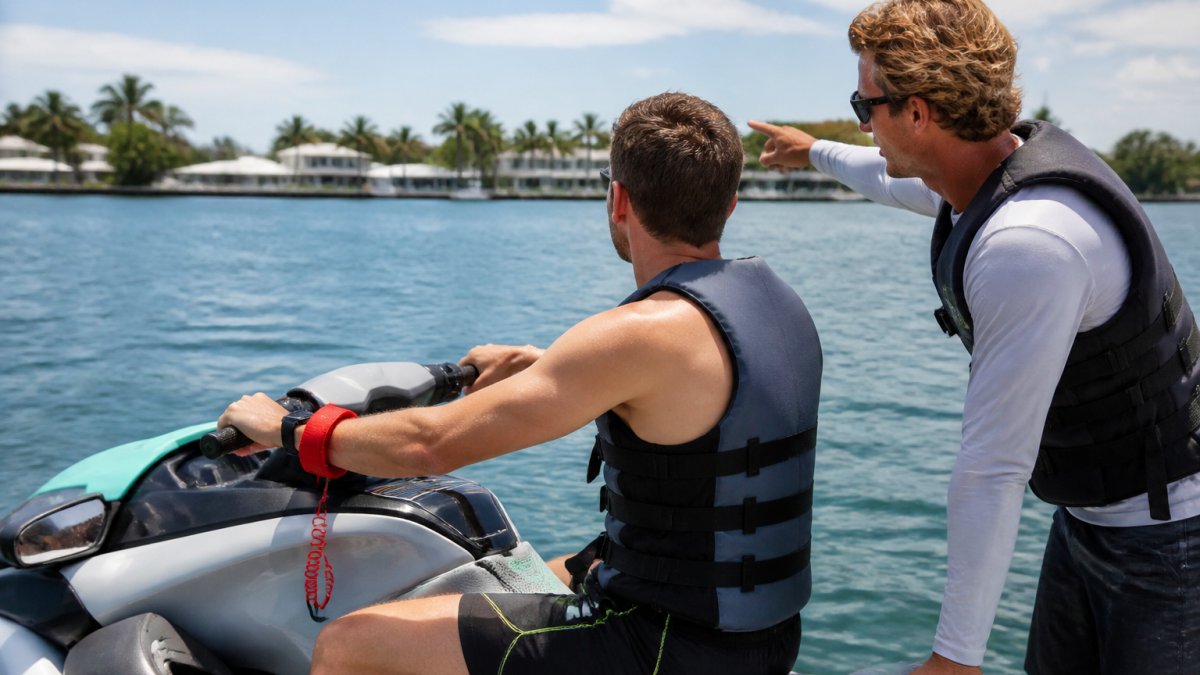
- Clip the safety lanyard to your jacket, not your wrist
- Check the engine cut-off switch works
What to Wear Jet Skiing: Gear That Keeps You Safe
What you wear jet skiing matters more than most beginners expect. The right gear keeps you safe and comfortable for the whole ride.
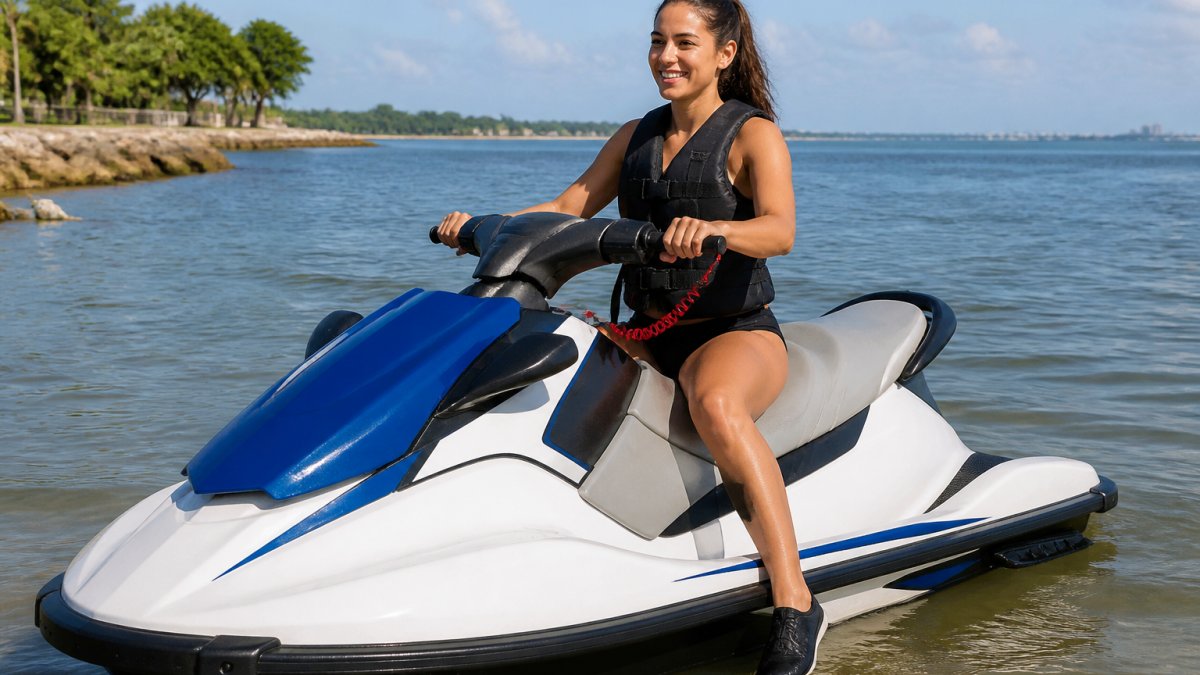
Start with a US Coast Guard-approved life jacket. It must fit snugly and stay put if you enter the water.
Next, the safety lanyard. This cord connects your wrist or jacket to the engine cut-off switch.
Add these items:
- Water shoes with grip for the dock and the footwells
- Sunglasses with a strap so they stay on
- Sunscreen, applied before you launch
- A swimsuit or quick-dry clothing, not loose cotton
Skip anything that dangles. Loose straps and jewelry can catch on controls.
How to Start a Jet Ski: Controls, Lanyard, and First Throttle
Starting a jet ski is simple once you know the sequence. Clip the lanyard to the cut-off switch first, then start the engine, then check for traffic before you touch the throttle.
Here is the order we teach:
- Mount from the rear and kneel in the footwells, centered.
- Clip the lanyard to the engine cut-off switch.
- Start the engine with the start button. It should idle immediately.
- Scan the water in every direction for boats, swimmers, and other riders.
- Apply gentle throttle and ease away from the dock or shore.
The throttle lives on the right handlebar. Many rental providers, including Miami Wave WaterSports, offer a short guided orientation so you feel the throttle response before you head into open water.
How to Steer a Jet Ski: Throttle, Turns, and Stopping
Steering a jet ski works nothing like steering a car. The handlebars direct a stream of water pushed out the back by jet propulsion. No thrust means no turn.
A few rules follow from it:
- Keep light throttle through every turn. Coasting into a turn gives you zero control.
- Make wide, gentle turns first. Sharp turns come later, once you trust the machine.
- Plan your turns early. A jet ski does not pivot in place at speed.
- Look where you want to go, not at the handlebars. Your eyes on the horizon keep you steady.
Stopping takes distance. Release the throttle and the watercraft glides, slowing gradually. There are no brakes. Give yourself at least two boat lengths of clear water before you stop near anything solid.
Your First Ride: A Step-by-Step Walkthrough for Beginners
Here is the complete first ride, in order. Follow it once and the rest gets easier.
- Launch from the ramp or beach with the watercraft pointed toward open water.
- Board from the rear, kneel, then sit with feet shoulder-width apart.
- Start the engine and let it idle for a moment.
- Ease out at low throttle for the first 100 yards.
- Practice gentle turns left and right while holding steady throttle.
- Test a slow stop in open water with nothing nearby.
- Pick up speed gradually once turns feel natural.
- Return to the dock at low speed, approaching into the wind or current.
Keep your stance centered with bent knees. Weight distribution controls the ride more than the handlebars do. Shift forward for stability at speed and back slightly in chop.
Falling Off, Reboarding, and Emergency Response
Falling off is normal, and the machine is designed for it. The lanyard kills the engine the moment you separate, so the watercraft will not run away from you. The hard part is not the fall, it is staying calm and doing the right things in the right order.
The moment you hit the water
- Keep your feet up and pointed downstream or away from the craft. Do not try to stand in water you cannot see the bottom of.
- Let your life jacket float you on your back or in a relaxed upright position. Fighting the jacket wastes energy.
- Locate the watercraft and check that the engine is off. If the lanyard did not pull free, swim to the cut-off switch and pull it manually.
- Check yourself for injury before you swim anywhere. If you are hurt, stay put and signal.
- Stay with the watercraft. It floats, it is bright, and it is far easier for rescuers to spot than a swimmer's head.
How to reboard from the water
Always approach from the rear, never the side. The rear boarding platform is designed for it, and the side is where you can get pulled into the intake or struck by the hull in chop.
- Swim to the rear and grab the boarding platform or rear handle.
- Kick hard and pull yourself up in one motion; do not try to muscle up with your arms alone.
- Keep your weight low and centered as you come aboard.
- Reclip the lanyard, scan for traffic, then restart.
If you cannot reboard, exhaustion, injury, heavy chop, stay at the rear of the craft, hold on, and use your signaling gear. Do not try to climb aboard from the side.
Emergency equipment to carry
A whistle, a waterproof light, and a signaling mirror are small, cheap, and genuinely useful. A whistle carries farther than a shout and works when your voice is gone. A light matters if you are out later than planned. Carry them in a pocket or clipped to your life jacket, not in a dry bag strapped to the craft, if you separate from the machine, you want the gear on you.
If the engine dies and will not restart
- Drop anchor if you have one and are in a channel or near a hazard; otherwise drift and signal.
- Stay with the craft and keep everyone together.
- Signal with the whistle, light, or mirror, and wave both arms if a boat approaches.
- Do not swim for shore unless land is very close and the water is calm, most drownings in these situations involve swimmers who left a floating craft.
Water Conditions, Local Rules, and Right-of-Way
Water conditions decide whether you ride at all. Flat water is ideal for beginners. Chop, wind, and boat wakes make balance harder and turns less predictable. Check the forecast before you book, and ask about rescheduling if conditions turn. Many rental operators build flexibility into hourly and full-day rentals so weather does not cost you the day.
Reading conditions before you launch
- Wind: Anything above about 10-15 mph starts building chop that a beginner will feel. Wind against current makes steeper, choppier water.
- Wakes: Boat wakes arrive without warning and can be two feet or more. Slow down and take them at an angle, not head-on at speed.
- Currents: Inlets, river mouths, and tidal areas can push you off line. Plan turns with extra room.
- Visibility: Fog, glare, and low sun make other craft hard to see. If you cannot see clearly, do not ride.
Rules of the water: practical examples
Rules vary by state and waterway. Most states require a boating safety course or license for riders under a certain age, and many set a minimum age to operate. The U.S. Coast Guard boating safety resources lists state requirements.
Right-of-way follows simple rules, but the examples matter more than the rule:
- Give way to sailboats under sail. A sailboat cannot stop or turn quickly, so you adjust.
- Keep clear of swimmers and anchored boats. Give swimmers a wide berth and slow to no-wake speed near swim areas.
- Pass other craft at a safe distance and slow speed. Overtake on the side the other boat expects, and do not cut across a boat's bow.
- Meeting head-on: both craft turn to their right (starboard) and pass port-to-port.
When in doubt, slow down and give way. A jet ski is the most maneuverable craft on the water, so the burden of avoiding trouble usually falls on you.
Practice Drills and Progression Plan for New Riders
Confidence comes from repetition, not speed. Build your skills in this order over your first few rides.
| Drill | What It Builds | Time |
|---|---|---|
| Slow figure-eights | Throttle and turn control | 10 min |
| Wide turns at speed | Steering with momentum | 10 min |
| Controlled stops | Stopping distance judgment | 5 min |
| Reboarding practice | Fall recovery | 5 min |
| Wake crossing | Balance and weight shift | 10 min |
Run the drills in calm water with plenty of space. Add speed only when each one feels boring. That boredom is the signal you are ready for the next step.
Learning to ride a jet ski comes down to one habit: respect the throttle and the water. Miami Wave WaterSports makes that easy with guided jet ski rides, flexible hourly rentals, and full-day adventures that include sandbar stops along the coast.
Frequently Asked Questions
Is it easy to ride a jet ski for the first time?
Yes, most beginners can ride a jet ski within 10 to 15 minutes of instruction. The key is understanding that a jet ski needs throttle to steer. With no throttle, you have no steering. Start in a wide-open area with light boat traffic, keep both hands on the handlebars, and practice gentle turns at low speed before accelerating. A guided rental with a pre-ride briefing shortens the learning curve and keeps you inside safe, legal riding zones.
What should a beginner know before riding a jet ski?
Four things matter most. First, always wear a U.S. Coast Guard-approved life jacket and attach the safety lanyard to your wrist or vest. Second, jet skis steer only when you apply throttle, so release the throttle and you lose turning control. Third, stay in water at least 3 feet deep and avoid shallow areas where the intake grate can suck up sand and debris. Fourth, know your local boating rules, including speed limits near shore and no-wake zones.
How do you start and stop a jet ski?
To start, attach the safety lanyard to the kill switch, set the handlebar to neutral or idle, and press the start button. Let the engine idle for a minute before applying throttle. To stop, release the throttle and let the jet ski coast down, then press the stop button or pull the lanyard. Remember that jet skis have limited braking, so allow a stopping distance of at least 100 feet at speed and never stop abruptly in front of another vessel.
Do you need to wear a life jacket on a jet ski?
Yes. U.S. Coast Guard rules require a wearable, approved life jacket for every person on a personal watercraft, and it must fit properly. A life jacket keeps your head above water if you fall off and makes reboarding easier. Choose a vest-style jacket rated for your weight, tighten all straps, and test it in shallow water before your ride. Never substitute a water ski belt or inflatable toy for a Coast Guard-approved jacket.