 how-to
Can Children Ride Jet Skis in Miami? Family Guide
Table of Contents
- Can Children Ride Jet Skis in Miami? The Short Answer
- Jet Ski Age Requirements for Passengers
- Jet Ski Rental Age Requirements: Who Can Drive
- Children's Life Jackets for Jet Skiing: Fit and Fit Checks
- Jet Ski Safety Tips for Families Before You Book
- Step-by-Step: Getting Kids On and Off the Watercraft Safely
- What to Do If a Child Falls Off or the Craft Capsizes
- Conclusion
- Frequently Asked Questions
Last Updated: October 22, 2026
Can Children Ride Jet Skis in Miami? The Short Answer
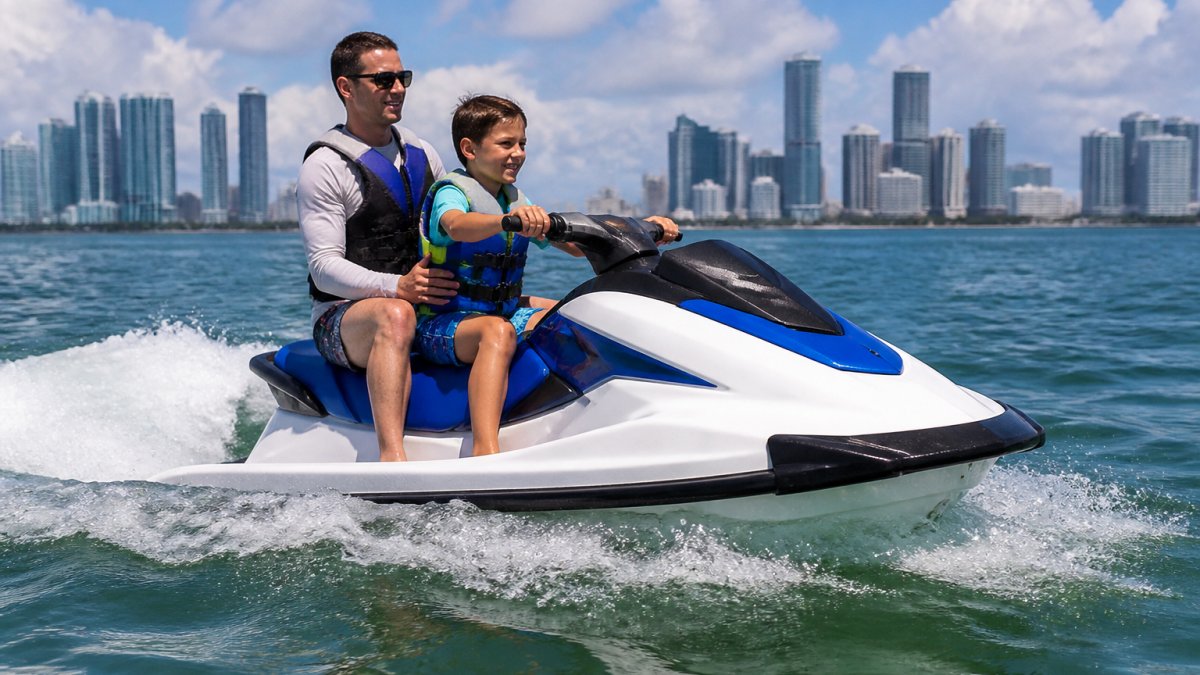
Yes, children ride jet skis in Miami, but almost never as the driver. Florida law bars anyone under 14 from operating a personal watercraft, so kids ride as passengers with an adult at the controls.
Here's the part most parents miss: passenger rules aren't set by the state.
Below, we break down the rules, the gear, and the step-by-step process for a safe family ride.
Jet Ski Age Requirements for Passengers
There is no single statewide minimum age for riding as a jet ski passenger. One Miami listing allows passengers age 6 and older on a two-seat craft if they can hold on independently, while other Miami rental guidance describes a general under-14 passenger rule without naming a provider minimum.
So what should you actually ask? Three things:
- Minimum passenger age: get a number, not "kids are fine."
- Seat count: a two-seat craft carries one adult and one child, not three people.
- Supervision rules: some operators require the adult to stay within arm's reach.
A child's ability to ride as a passenger does not mean riding is risk-free. Medical experts at the University of Florida warn that children are more likely to be seriously injured in personal-watercraft accidents, which is why fit and supervision matter more than age alone.
Jet Ski Rental Age Requirements: Who Can Drive
Florida prohibits anyone under 14 from operating a personal watercraft. That's the hard floor, and no rental agreement can override it. Renters typically must also be adults who can sign the agreement and show ID.
For families, this creates a simple split:
- Under 14: passenger only, with an adult operating.
- 14 and up: may operate, subject to the provider's own rules and any required safety course.
- Adults: operate and carry passengers within seat limits.
What most guides skip is the learner's permit question. Florida ties PWC operation to boater education requirements for younger operators, and the specifics change. Ask your provider what they require before you arrive, and check the state's current boater education rules directly.
Children's Life Jackets for Jet Skiing: Fit and Fit Checks
A Coast Guard-approved life jacket is required for every person on board, kids included. Not a water wing, not a pool noodle, not an adult vest cinched tight. A proper children's life jacket is sized by weight and chest, and it must stay put when a child hits the water.
Run this fit check before you leave the dock:
- Jacket is labeled Coast Guard-approved
- Weight range on the label matches your child
- Zipper and buckles close fully with no gaps
That last one matters. Have your child float in the shallows and confirm the vest doesn't ride up. If it does, size up or switch models.
Jet Ski Safety Tips for Families Before You Book
Most family jet ski guides hand you a checklist and stop there. What separates a calm first ride from a white-knuckle one is understanding how the craft actually behaves before you squeeze the throttle. Use the questions below to vet an operator, then the drills to prepare your child for the two moments beginners handle worst: low-speed steering and coming back to the dock.
Pre-booking questions that reveal a real safety culture
Ask these before you pay a deposit. The answers tell you more than any brochure.
- "Walk me through your pre-ride briefing." A good operator names the life jacket fit check, the safety lanyard, the engine cut-off switch, the riding area boundaries, and the swim zones. A rushed operator says "we go over everything."
- "What is your minimum passenger age, and is it different for a two-seat versus three-seat craft?" Get a number and a seat count. Providers set their own passenger rules, so this is not a state-law question.
- "How do you handle a child who falls off?" Listen for a specific recovery sequence (throttle off, lanyard kills engine, slow approach from downwind, reboard from the rear). Vague reassurance is a red flag.
- "What's the ratio of guides to families on the water?" A guide who can see every child in the group is worth more than a faster craft.
- "Do you brief the low-speed steering behavior?" Personal watercraft need thrust to steer. An operator who explains this before launch has thought about beginners.
The pre-ride briefing: what a thorough one covers
A complete briefing should hit all of these. If any item is missing, ask for it.
- Life jackets on and fitted for every rider before boarding, not after.
- Safety lanyard attached to the operator's wrist or vest, with a demonstration of how pulling it kills the engine.
- Controls explained: throttle, steering, and the fact that releasing the throttle cuts thrust and steering authority.
Two drills to run before you leave the no-wake zone
These take five minutes and pay off all day, covering the low-speed handling gap most guides skip.
Drill 1, The idle turn. At idle speed, turn the handlebars and notice the craft barely responds until you add a touch of throttle.
Drill 2, The controlled stop. Accelerate gently to a slow plane, then release the throttle completely. Feel how the craft keeps gliding and how steering fades as thrust drops.
Passenger mechanics: weight, handholds, and communication
Adding a child changes how the craft handles. A passenger shifts the center of gravity, so turns feel different and the nose rides higher or lower depending on where the child sits. Brief your child on three things:
- Sit centered and low, not on the edge or standing.
- Grip the handholds with both hands, not the operator's waist, which can throw off balance.
- Tap the operator's shoulder twice to signal "slow down" or "I'm not okay." Agree on the signal at the dock.
Step-by-Step: Getting Kids On and Off the Watercraft Safely
Boarding is where most family trips go sideways. The craft is unstable at rest, the dock is slippery, and excited kids move fast. Slow everything down.
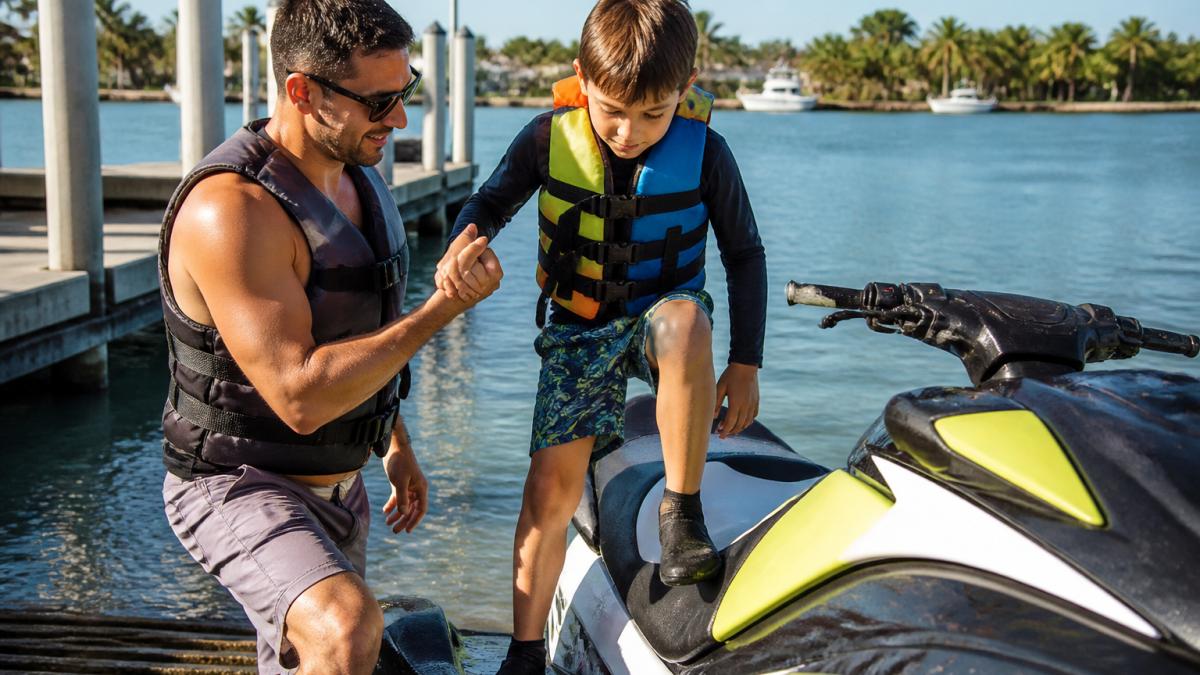
Follow this sequence:
- Adult boards first and settles into the operator seat.
- Child hands over any bags or gear to someone on the dock.
- Child steps to the center of the craft, one hand on the adult's shoulder.
- Child sits down and grips the handholds with both hands.
- Adult starts the engine only after everyone is seated and the lanyard is attached.
- Return to the dock: engine off, adult steps off first, then helps the child up.
Low-speed handling surprises first-timers. Steering responds only when you apply throttle, so a jet ski doesn't turn like a car when you coast. Explain that before you go, and keep speed low near the ramp, swimmers, and other vessels.
What to Do If a Child Falls Off or the Craft Capsizes
Falling off is common, and a calm, rehearsed response keeps it from becoming an emergency. Most guides say "stay calm" without giving the actual sequence. Here is the order that works, plus the reboarding mechanics and emergency signaling beginners most often get wrong.
If a child falls off
- Release the throttle immediately. The lanyard should cut the engine as the operator separates from the craft, confirm it is attached before you launch.
- Keep the child in sight. Point at them and keep pointing. A small swimmer in chop is hard to spot.
- Turn back slowly and approach from the downwind side so wind and drift push the craft toward the child, not over them.
- Cut the engine before anyone reboards. Never approach a child with the engine running.
- Check the child first. Confirm they are conscious, breathing, and that the life jacket is still seated on the shoulders. Ask: "Are you okay?" and "Can you swim to the rear platform?"
- Reboard from the rear, never the side. The rear platform is stable; the side rolls.
If the craft capsizes
A personal watercraft floats even when swamped, and it is far easier for rescuers to spot than a swimmer. Stay with it.
- Keep the child on the upturned hull or holding the rear platform. Do not let them swim for shore unless land is close and the water is calm.
- Count heads. Confirm every rider is accounted for before you right the craft.
- Right the craft per the operator's instructions. Most brief this at the dock; if yours did not, ask before you launch.
Reboarding mechanics that prevent injury
- Approach the rear platform from the water, hands on the platform, then push up and swing a knee aboard.
- The operator stays low and centered to counterbalance the child's weight as they climb.
- Never reboard over the side, that is how craft roll.
Emergency signaling and communication
Before you leave the dock, confirm three things: the operator's radio channel or phone number, the local emergency number, and a visual signal (a whistle, a mirror, or a bright flag) every rider knows how to use. If a child is injured or unresponsive, call for help first and keep the child on the craft or platform, do not attempt a long swim.
Conclusion
The rules for children on jet skis are simple to learn but easy to get wrong: no driver under 14, passenger age set by the provider, and a properly fitted life jacket on every child.
At Miami Wave WaterSports, we build family rides around exactly that.
Get started with Miami Wave WaterSports and give your kids a first ride they'll remember for the right reasons.
Frequently Asked Questions
Can children ride jet skis in Miami?
Yes, children can ride as passengers on jet skis in Miami with an adult operator, but the minimum passenger age depends on the rental provider. Some Miami listings allow passengers age 6 and older on a two-seat craft if they can hold on independently, while other sources cite a general under-14 passenger rule. Florida prohibits children under 14 from operating a personal watercraft themselves. Always confirm the provider's own minimum age and conditions before booking, and pair the ride with a properly fitted life jacket.
Do children need a life jacket on a jet ski?
Yes. Every passenger, including children, should wear a Coast Guard-approved life jacket for the entire ride. Fit matters more than size label: the jacket should stay snug when you lift it by the shoulders, with no gap above the chest. Check buckles and straps before launch, and test the child in shallow water first. A jacket that rides up over the ears is too loose, so swap it for a smaller size before heading out.
Can a child drive a jet ski with an adult on board?
In Florida, children under 14 cannot operate a personal watercraft, even with an adult passenger. Riders 14 and older may operate a PWC after completing an approved boating safety course and carrying the certificate, though rental providers often set their own higher minimums. For younger kids, the safe option is riding as a passenger behind an adult operator who controls the throttle and steering at all times.
What should parents check before booking a jet ski ride with children?
Ask four things before you pay: the provider's minimum passenger age, whether child-sized life jackets are included, how the safety briefing is delivered, and the reschedule policy for rough weather. Confirm the craft has handholds a child can grip and that the operator will keep speed modest with a young passenger aboard. Also check the group size per craft, since two adults plus a child usually means a three-seat model.