 blog
Are Jet Ski Rentals Safe for Families?
Last Updated: October 26, 2026
Quick Summary
Safe jet ski rentals for families start with a reputable operator, correctly fitted life jackets, and a clear safety briefing before anyone touches the throttle. We walk every group through controls, no-wake zones, and hand signals before a ski leaves the dock, and the stricter of state law or company policy always governs age and supervision rules.
- A teenager who drives a car is not automatically legal to drive a jet ski; confirm both credentials.
- Every rental ski should include a Coast Guard-approved life jacket per rider and a working kill switch.
- For most families, two hours is the right starting point for a first ride.
- Compare itemized written quotes, not headline rates, since fuel, fees, and gratuity add up.
- Book the shorter duration first; extending on the water beats cutting a long booking short.
Table of Contents
- What Makes Jet Ski Rentals Safe for Families
- Jet Ski Age Requirements for Passengers and Drivers
- Jet Ski Rental Safety Equipment to Check Before You Book
- Jet Skiing With Kids Safety Tips for First-Time Families
- How to Verify a Rental Operator's Safety Practices
- How Long to Rent a Jet Ski for a Family Trip
- Budgeting the Total Family Trip Cost
- Book Your Family Jet Ski Ride With Confidence
- Frequently Asked Questions
What Makes Jet Ski Rentals Safe for Families
Safe jet ski rentals for families start with three things: a reputable operator, correctly fitted life jackets, and a clear safety briefing before anyone touches the throttle. At Miami Wave WaterSports, we walk every group through controls, no-wake zones, and hand signals before a ski leaves the dock.
The U.S. Coast Guard classifies jet skis as personal watercraft, with specific legal requirements for flotation, registration, and operation. A company that treats those rules as paperwork rather than a checklist is one to walk away from.
A family-safe jet ski rental is one where the operator controls the variables you cannot: equipment condition, rider matching, supervision ratios, and weather calls. Get those right and the ride itself is straightforward.
Jet Ski Age Requirements for Passengers and Drivers
Age rules for jet skis come from two layers: state law and the rental company's own policy. Both apply, and the stricter one wins.
The Two Layers of Rules
Layer one: state law. Every state sets its own minimum age to operate a personal watercraft, and thresholds are not uniform. A common pattern is a minimum operator age in the mid-teens, often paired with a boater education certificate for younger operators.
Layer two: the operator's policy. Rental companies routinely set rules stricter than state law: a higher minimum operator age, a required adult companion, a rider cap per ski, or a ban on minors operating unguided skis.
How to Verify the Rules Before You Book
Rules change, so skip blogs and forums. Use these sources in order:
- Your state boating agency's website. Search "personal watercraft operator age" plus your state name, the authoritative source.
- The state boater education course provider. Many states require a certificate for younger operators, and the provider's site restates the rules plainly.
- The rental company's written policy. Ask for it in writing, not a verbal "it's fine." If they cannot produce one, treat that as a signal.
- The U.S. Coast Guard's boating safety resources. A good cross-check, not a substitute for the state agency.
Questions That Surface the Real Policy
Ask these four questions before you pay a deposit:
- "What is your minimum operator age, and does it differ from state law?" The answer shows whether they have a policy or are improvising.
- "Do you require a boater education certificate, and for which ages?" Many operators are stricter than the state here.
- "Can a minor operate unguided, or only on a guided tour?" Supervision rules often hinge on this.
Supervision and Passenger Rules in Practice
Where state law is silent, a sensible family policy fills the gap:
- Pair every minor operator with an adult on the same ski for the first ride, regardless of the law.
- Keep passengers within the ski's rated capacity, usually two or three, and respect the hull's weight limit.
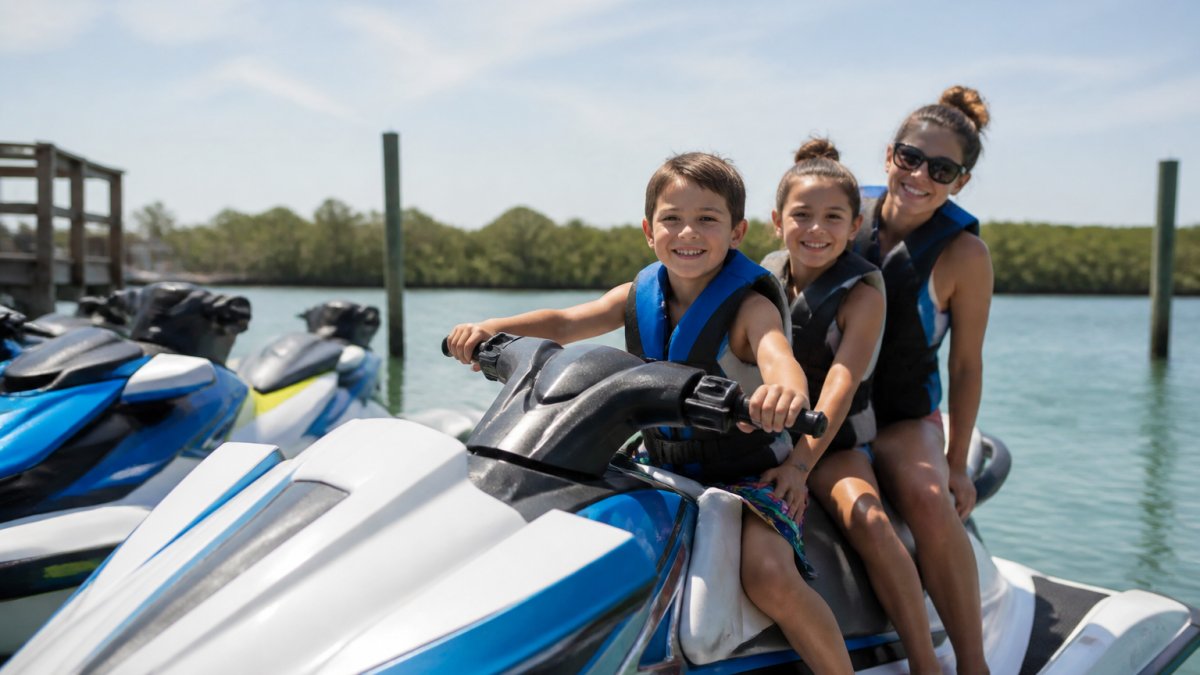
- Confirm child life jacket sizing before leaving the dock; a jacket that rides up over the ears is not fitted correctly.
- Ask whether the operator excludes unguided minors. Some require a guide whenever a minor operates, which changes the price and the plan.
If the answers are vague, that is your answer. A company that cannot state its age and supervision policy clearly is not the one to trust with your kids.
Jet Ski Rental Safety Equipment to Check Before You Book
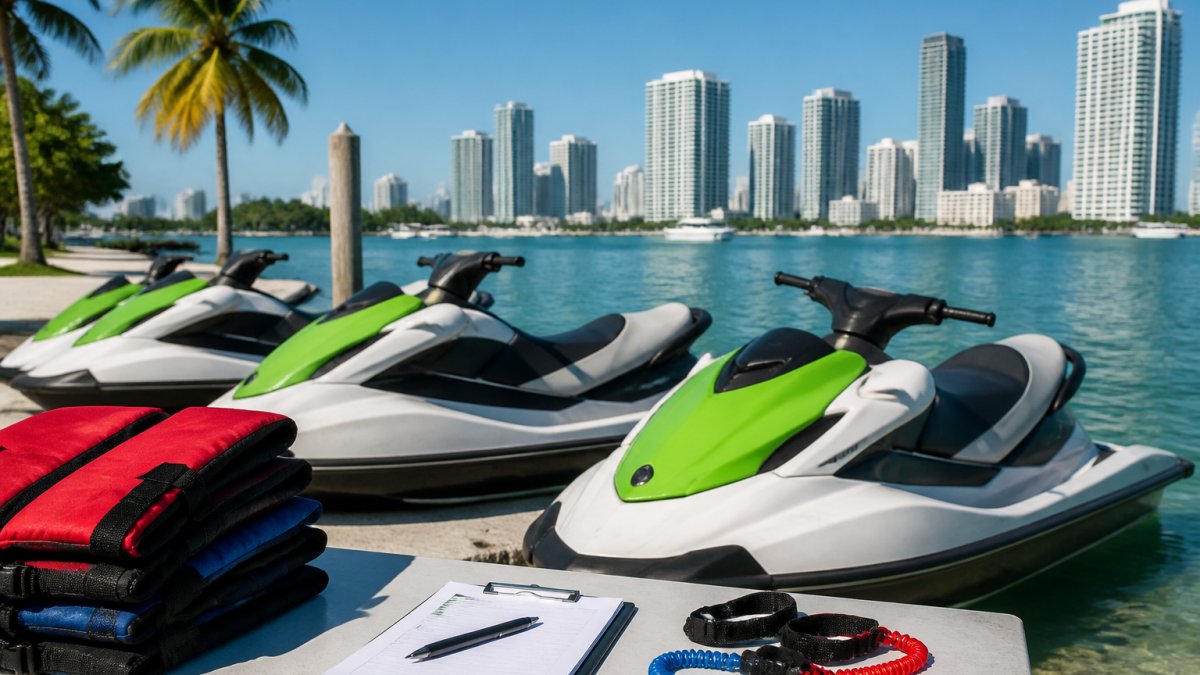
Every rental ski should come with a U.S. Coast Guard-approved life jacket per rider, a working kill switch, and a fire extinguisher where required. A family preparing for their ride may want a jet ski safety kit with anchor line and dry bag for their outing. If any is missing or in poor condition, do not ride, inspect the dock before you sign anything.
Life Jackets, Kill Switches, and What to Inspect
- Life jacket fit: Try it on. It should not ride up over the ears when you lift your arms.
- Child sizing: Confirm the operator stocks child sizes, not just adult jackets cinched tight.
- Kill switch lanyard: Attach it to the rider and test that the engine cuts when pulled.
- Hull and seat condition: Look for cracks, loose seats, or a spongy deck.
Jet Skiing With Kids Safety Tips for First-Time Families
Ride slow, ride close, and ride short. That is the whole strategy for a first family outing.
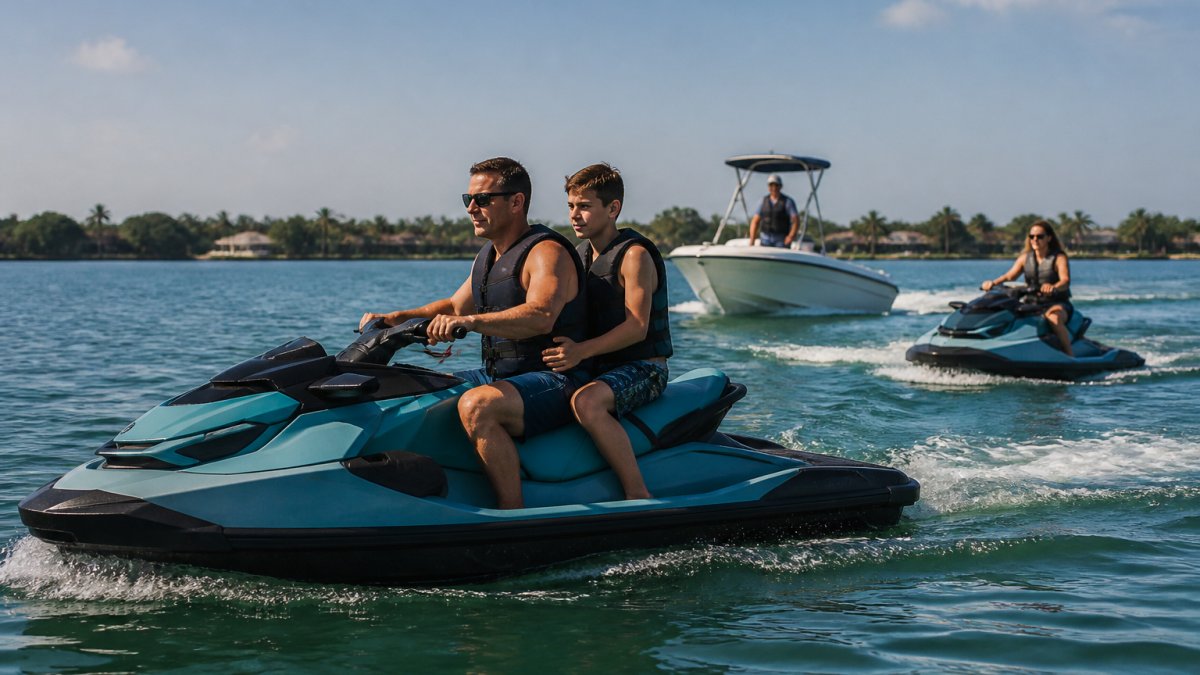
Children's Hospital Los Angeles warns that many children are injured each year riding personal watercraft, and publishes safety guidelines for young riders.
- Pair every child with an adult on the same ski for the first ride.
- Set a speed ceiling and agree on it before departure.
- Use hand signals: thumbs up for faster, pat the head for stop.
- Keep the group together and stay inside the operator's marked area.
Watch out: a child who is a strong swimmer is not automatically ready for open water. Confidence in a pool and confidence at speed are different skills.
How to Verify a Rental Operator's Safety Practices
Verify an operator by asking specific questions and watching how they answer. Vague reassurance is a red flag; documented procedures are a green one.
Ask these before booking:
- "Are your skis inspected, and how often?" Look for a maintenance log.
- "What is your safety briefing?" It should cover controls, kill switch, no-wake zones, and right-of-way.
- "What are your weather and cancellation policies?" A written policy protects your money.
- "Do you require a boater safety certificate?" The answer shows how seriously they treat state law.
- "What is your guide-to-rider ratio?" Guided groups should have a clear cap.
Read recent reviews for late equipment, hidden fees, or rushed briefings, patterns matter more than one glowing post. If anything feels off, contact us before you pay a deposit. A legitimate operator welcomes the scrutiny.
How Long to Rent a Jet Ski for a Family Trip
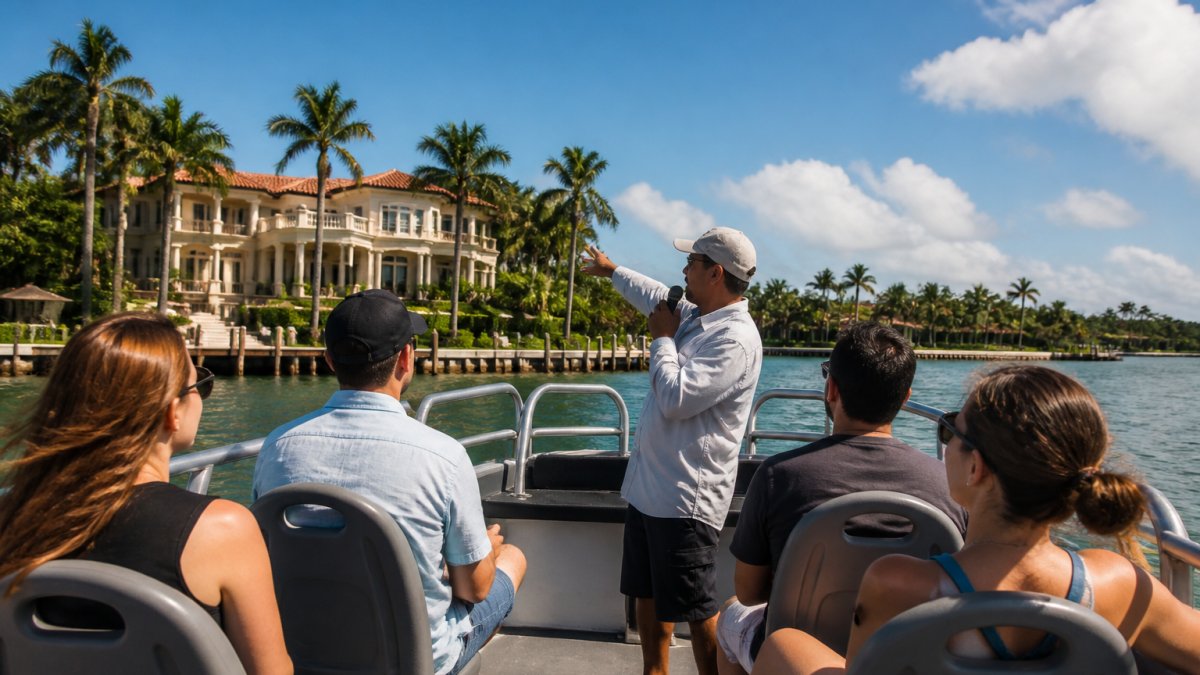
For most families, two hours is the right starting point: a safety briefing, a guided route, sandbar time, and enough riding without exhausting younger kids. Hourly rentals give flexibility; full-day options suit groups exploring several stops. Rates vary by location and season, so plan around demand rather than a fixed figure.
Matching Rental Duration to Ages and Attention Spans
| Group | Suggested Duration | Why It Works |
|---|---|---|
| Kids under 10 | 1-2 hours | Short attention span, quick fatigue |
| Tweens and teens | 2-3 hours | Enough time for a route plus sandbar stop |
| Mixed-age family | 2 hours | Balances riding time with breaks |
| All-adult group | Half or full day | Longer routes and multiple stops |
A good rule: book the shorter option first. Extending on the water is usually easier than cutting a long booking short with tired kids.
Budgeting the Total Family Trip Cost
The rental rate is only one line on the bill, and rarely the one that surprises families. The real total includes deposits, fuel, taxes, guide gratuity, and gear, get every one in writing before you book.
The Line Items That Make Up the Real Total
Rental fee. Usually quoted per ski per hour, half-day, or full day.
Security deposit. Most operators place a credit card hold before you ride, released after the ski returns undamaged.
Taxes and fees. Sales tax applies in most states, and some operators add booking, card processing, or damage waiver fees.
Guide gratuity. Customary on guided tours and usually not included in the quoted rate.
Contingency. Weather cancellations and reschedules are common on the water.
How to Compare Operators on Total Cost
Do not compare headline rates, compare itemized quotes. A lower hourly rate with a fuel surcharge, damage waiver, and card fee can cost more than a higher all-inclusive quote.
| Line item | Operator A | Operator B |
|---|---|---|
| Rental fee (per ski, per duration) | ||
| Security deposit (amount and type) | ||
| Fuel (included or charged) | ||
| Taxes | ||
| Fees (booking, card, waiver) | ||
| Guide gratuity (typical) | ||
| Gear add-ons | ||
| Cancellation and weather policy |
Fill this in from written quotes, not phone conversations. An operator who will not put the total in writing is telling you something useful.
Ways Families Actually Save
- Book the shorter duration first. Extending on the water is easier than cutting a long booking short with tired kids.
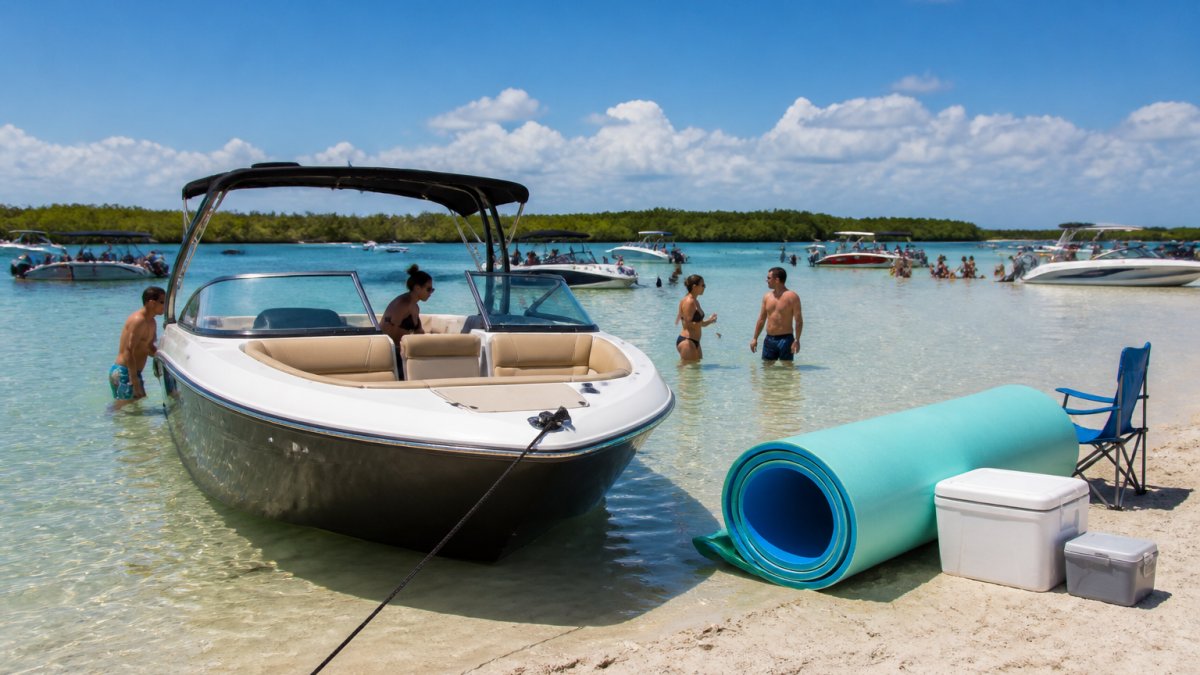
- Split a boat rental across several families. For larger groups, a shared boat often costs less per person than individual skis and keeps everyone together.
- Ride midweek or in the shoulder season. Demand drives rates, so date flexibility is the biggest lever on price.
- Bring your own gear. A dry bag, rash guards, and reef-safe sunscreen bought ahead beat the dock markup.
A family of four on a two-hour guided ride should expect the total to be meaningfully higher than the headline rate once deposit, tax, gratuity, and gear are counted. Budget for the full number, not the advertised one.
Book Your Family Jet Ski Ride With Confidence
The challenge is not finding a rental.
That is what we built our operation around. Readers wanting a family-friendly watercraft option can explore the jetcar rentals as an alternative ride.
Browse the jet ski rentals to pick a duration, and check the address and location details so you can plan the drive with the family.
Get started with Miami Wave WaterSports and put your family on the water with a plan instead of a guess.
Frequently Asked Questions
Are jet skis safe for children to ride as passengers?
Children can ride as passengers when the operator follows age rules, fits them with a properly sized life jacket, and keeps speeds moderate. Children's Hospital Los Angeles warns that many children are injured each year on personal watercraft, so family suitability is not a guarantee of safety. Ask the rental company about minimum passenger age, whether a guide accompanies the ride, and how the child will be seated and supervised before you book.
What safety equipment should a family jet ski rental provide?
Every jet ski rental should include a US Coast Guard-approved life jacket sized for each rider, a kill switch lanyard attached to the operator, and a safety briefing before departure. Ask whether a fire extinguisher, whistle, and emergency contact method are on board. Confirm the equipment is included in the rental price rather than an add-on fee, and inspect the life jacket fit yourself before leaving the dock.
How long should a family rent a jet ski?
For most families with kids, a one to two hour rental covers the experience without wearing out younger riders. Hourly rentals vary in price depending on location and season, so a shorter block keeps costs down and leaves room for a guided tour or sandbar stop. Full-day options make sense for groups of older teens who want multiple riding sessions with breaks in between.
What should families ask a jet ski rental company before booking?
Ask about minimum operator age, passenger age limits, life jacket sizing for children, whether a safety orientation is included, and what happens if weather cancels the ride. Confirm the cancellation and reschedule policy in writing, and check whether the quoted price covers fuel, taxes, and equipment. Reviews and a clear safety briefing are the strongest signals that an operator takes family riders seriously.
The real test of a family jet ski trip is whether everyone wants to do it again. Choose an operator who briefs properly, fits the jackets, and answers your questions in writing, and that second trip books itself.